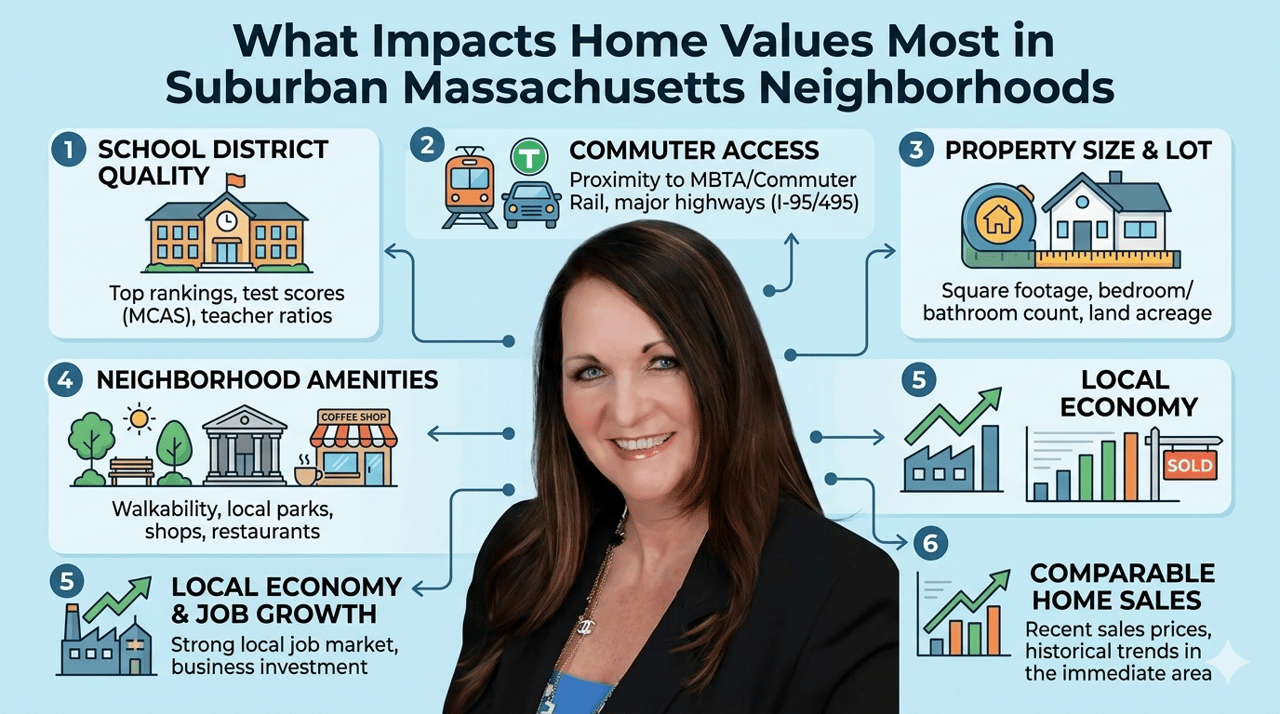
Summary: Home values in suburban Massachusetts reflect more than square footage or curb appeal. Long-term demand connects closely with schools, commuting patterns, housing supply, and how each town evolves over time. Buyers tracking Westwood MA homes for sale and sellers evaluating a Home For Sale Norfolk MA benefit from understanding these local dynamics before making decisions that shape equity and lifestyle.
Suburban Massachusetts real estate follows its own logic. Towns may sit only a few miles apart, yet values move differently based on schools, zoning, commuter access, and community character. Buyers exploring Westwood MA homes for sale and homeowners preparing a home for sale in Norfolk MA often discover that local context influences value more than market headlines. Understanding these drivers helps residents act with clarity rather than assumption.
Location Within the Town
Not all addresses carry equal weight, even inside the same ZIP code. The closeness to town centers, formed neighborhoods, and less busy residential streets always influence the buyer's interests.
Homes that are nearer to the village with pavements, local shopping facilities, and civic spaces often retain stronger value. Customers would like to walk through the daily requirements without compromising privacy. Contrarily, house prices in proximity to high-traffic corridors or commercial zoning experience narrower demand, even when home condition remains comparable.
Pricing patterns are still being affected by the town planning decisions that were made decades ago.
School District Reputation
School systems anchor suburban Massachusetts home values. Buyers often make their purchase plans based upon district boundaries and not town lines.
Strong test performance, stable funding, and communal engagement would maintain demand in the long run. Buyers who do not even have a school-age child take into consideration the quality of the district in their resale. This relationship justifies why similar houses in adjacent communities will fetch varying prices.
Homes located in well-established districts attract constant attention regardless of the active and stagnant market.
Commuter Access and Transportation Options
Commuter rail accessibility, availability of highway connectors, and convenient bus service are major factors that influence the price in the suburbs.
Homes within a reasonable distance of rail lines serving Boston attract professionals seeking predictable travel routines. Driving routes also matter. Communities that have good connections to either Route 1, Route 128, or interstate routes are attractive to buyers who have the flexibility of commuting to work and balanced family demands.
The convenience of transportation tends to outweigh the size of the home for the buyer who is mostly concerned with time and reliability.
Housing Inventory and Zoning Policies
The scarcity of housing is one of the characteristics of most suburbs of Massachusetts. New construction is hampered by strict zoning, lot size requirements, and environmental protection.
Inventory management value is low because it decreases the competition among the sellers. It is common that towns that permit considered growth without a shift in the character of the community tend to have a more balanced appreciation.
When considering Westwood MA homes on sale, buyers do not take long to realize the effect of scarcity on pricing expectations.
Home Condition and Maintenance History
Customers are very responsive towards houses that have a record of proper care. Modernized systems, concrete roofing, and well-maintained exteriors are indications of reliability.
Cosmetic upgrades may be of interest, but foundational maintenance enhances value in the long run. Buyers desire transparency and records of mechanical systems and integrity.
Vendors that treat deferred maintenance may place their houses in a better position without over-renovating.
Neighborhood Character and Stability
Suburban buyers value predictability. Older neighborhoods with deep-rooted residents, civic interaction, and stable property hold value through market shifts.
Neighborhood associations, preserved green space, and tree-lined streets enhance attractiveness. Consumers are responding well to the localities where the community identity is not transitional but rather clear.
Stability will bring some confidence in living and outlook of resales.
Local Tax Structure and Municipal Services
The property taxes have an impact on the affordability and purchasing decision-making. Buyers compare tax rates against perceived value in schools, infrastructure, and services.
Properly controlled municipalities that reinvest in roads, public safety, and recreation have more sustainable demand in the long run. Fiscal discipline and transparency are a guarantee to the buyers who are considering long-term ownership.
The tax level is not always relevant, but tax efficiency is.
Market Timing and Seasonal Trends
The markets of Massachusetts suburbs are seasonal. Spring and early summer are better seasons to create more activity, and the winter listing captures motivated buyers.
The homes that are entering the market when the demand is high tend to have better pricing outcomes. Timing aligns closely with school calendars and weather patterns rather than national trends.
Timing will help retain value for both the buyers and the sellers.
Economic Stability and Employment Centers
Proximity to major employment hubs strengthens suburban demand. Research institutes, universities, companies, and health care clinics are the roots of housing markets.
The suburbs that are affordable in terms of access to various employment hubs enjoy varied customer bases. Economic resilience helps with the regular pricing even during broader slowdowns.
Housing stability can usually be predicted best by local employment health as compared to national indicators.
Buyer Perception and Market Psychology
Perception shapes value as much as data. The reputation of the town, the word-of-mouth experience, and the old stories are the factors that affect buyer behavior.
Those communities that are renowned for good governance, smart planning, and lifestyle are those that keep their prices intact. Purchasers tend to respond to emotional cues supported by local knowledge.
Understanding perception allows sellers to position homes with clarity rather than assumption.
Why Local Expertise Shapes Smarter Real Estate Decisions?
Understanding what influences home values in suburban Massachusetts requires more than reviewing sales data. Local experience will provide the context that can only be explained by numbers. An experienced professional understands the impacts of how school boundary changes, and infrastructure development as well as the alteration in buyer preference on certain neighborhoods. This understanding can assist the buyers to consider long-term value and the sellers to market the homes in the correct position. Whenever decisions support the first-hand market information, clients proceed with assurance, clarity, and realistic expectations rooted in how communities truly function.
Conclusion
Suburban Massachusetts neighborhoods reward informed decision-making. Home values rise where planning, community engagement, and infrastructure align over time. Buyers and sellers navigating Westwood MA homes for sale or listing a home for sale in Norfolk, MA gain clarity by understanding these fundamentals. For personalized guidance grounded in local experience, Marilyn Freedman provides insight shaped by years of working within these communities.
Ready to discuss your next move with confidence? Reach out to Marilyn Freedman for informed guidance rooted in local knowledge.
Frequently Asked Questions
- Why do school districts affect home values so strongly in Massachusetts?
The quality of schools also affects the demand among buyers, confidence in resales in the long term, and stability in a community, which makes it a reliable pricing factor.
- Does proximity to commuter rail always increase value?
The accessibility of rail is popular among most purchasers, though neighborhood setting and noise considerations still matter.
- Do renovations always improve resale value?
The strategic updates are helpful, and over-improvement that goes above the neighborhood standards tends to limit the return.
- How does housing inventory influence pricing?
The scarcity contributes to the competition that sustains good pricing even in the slow market.
- Are suburban markets less volatile than city markets?
Suburban markets often show steadier pricing due to family-driven demand and longer ownership timelines.