A delayed smoke or carbon monoxide certificate can derail your closing at the last minute. If you are selling in Walpole, you will need proof your home meets Massachusetts smoke and CO alarm requirements, typically verified by the Walpole Fire Department before title transfer. The good news is that with a simple plan, you can pass on the first try. In this guide, you will get a clear checklist, a two to four week timeline, typical costs, and what to expect on inspection day so you can move to closing with confidence. Let’s dive in.
What the smoke/CO certificate is
In Massachusetts, sellers must show compliance with state building and fire regulations for smoke and carbon monoxide alarms at the time of sale. Local fire departments, including Walpole’s, commonly inspect and issue a certificate or compliance letter for real estate closings. Closing attorneys and lenders often require this document in the final packet.
Standards align with widely used guidance that calls for smoke alarms on every level, inside each bedroom, and in hallways outside sleeping areas. Carbon monoxide alarms are typically required on each level with fuel-burning appliances or an attached garage, and outside sleeping areas. Your local fire inspector is the authority on exactly what Walpole accepts, so plan to follow their direction.
Your 2 to 4 week timeline
Following a simple schedule keeps your sale on track and avoids re-inspections.
As soon as you list or accept an offer
- Confirm Walpole’s current inspection process, accepted payments, and lead times with the Walpole Fire Department’s Fire Prevention Office.
- Ask your closing attorney how the certificate should be titled and when it is due in the closing package.
- Walk your home to identify missing or expired alarms and any access issues in utility areas.
Two to four weeks before closing
- Schedule your smoke/CO inspection. Earlier is better in busy seasons.
- Replace any expired smoke or CO alarms and install missing units in required locations.
- Test every alarm and put in fresh batteries.
- Clear access to the furnace, boiler, water heater, electrical panel, and any finished attic or crawlspace.
- Make sure house numbers are visible from the street.
One week before inspection
- Re-test all alarms and check indicator lights.
- Gather receipts or documentation for recent alarm purchases or electrical work.
- Confirm payment method and entry instructions with the Fire Department.
After inspection
- If you pass, keep the certificate safe and share a copy with your attorney and agent.
- If items need correction, fix them right away, then schedule re-inspection. Keep all receipts for closing.
Pre-inspection checklist for Walpole sellers
Use this step-by-step list to prepare. It reflects common Massachusetts practice and widely used placement guidance.
Detectors: what you need
- Smoke alarms on every level, including the basement and any finished attic.
- Smoke alarms inside each bedroom and in hallways outside sleeping areas.
- CO alarms where required, typically on each level with fuel-burning appliances or an attached garage, and outside sleeping areas.
- Power source: newer homes often require hardwired smoke alarms with battery backup and interconnection. Older homes may allow battery units if they meet code. Confirm with the inspector.
- Replace any alarm at or beyond its end-of-life. Many smoke alarms should be replaced at about 10 years and many CO alarms at about 5 to 7 years per manufacturer guidance.
Placement and condition
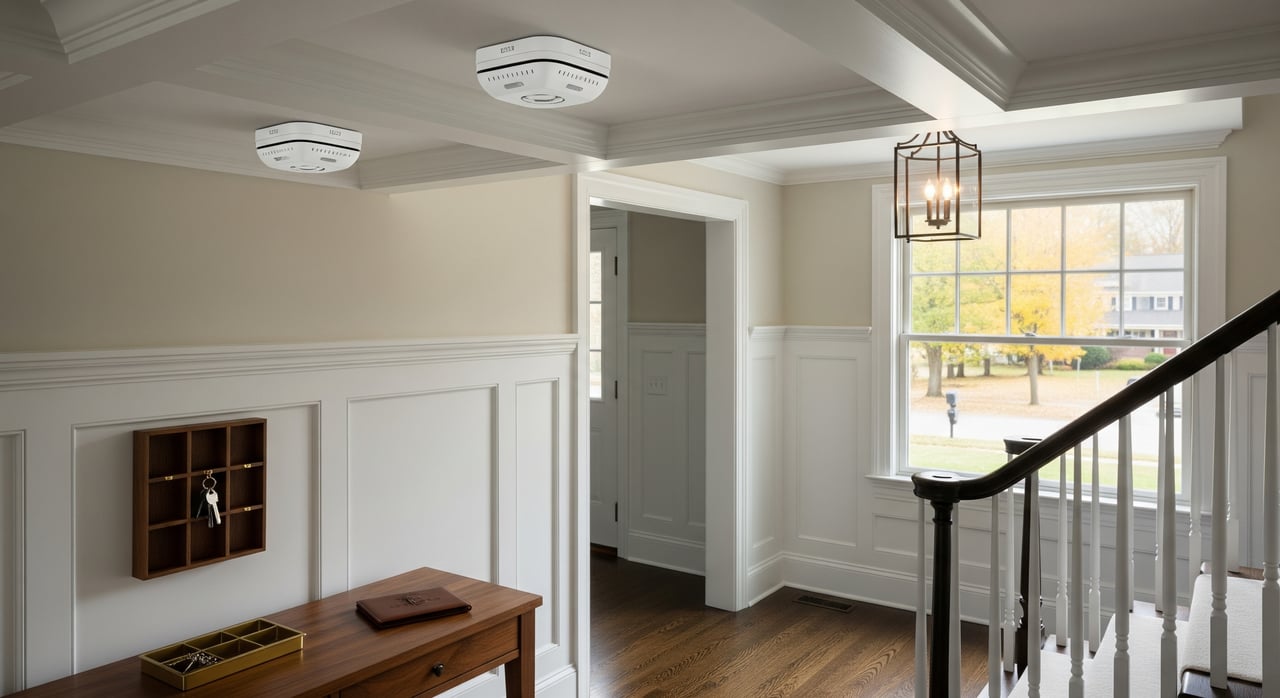
- Mount smoke alarms on ceilings at least a few inches from walls, or high on walls per manufacturer instructions.
- Avoid placing alarms near windows, vents, or kitchens where drafts and cooking can cause nuisance alarms.
- Ensure each alarm is mounted securely, not painted over, and the test button and indicator lights function.
Access and safety items
- Clear a path to mechanical systems like the furnace, boiler, and water heater.
- Make the electrical panel accessible and labeled.
- Verify your address numbers are visible from the street.
- Keep spare batteries on hand for any battery-only units.
Documents to have ready
- Receipts for newly purchased alarms and any recent electrical work.
- Notes on locations of each alarm by room and level.
Common inspection fails and quick fixes
Most failed inspections come down to a few simple issues. Tackle these first to improve your chance of a first-pass approval.
- Missing alarms in required locations. Install alarms in bedrooms, in hallways outside sleeping areas, and on every level, including the basement.
- Expired or non-functioning detectors. Replace any unit beyond its service life or with a failed test.
- Missing interconnection where required. Newer systems may need alarms that all sound together. This may require an electrician or a compatible wireless interconnected alarm set.
- CO alarms missing or out of date. Add CO alarms where required and confirm placement outside sleeping areas.
- Poor alarm placement. Move alarms away from vents, windows, and steamy kitchens that can cause nuisance trips.
- Blocked utility access. Clear clutter that prevents easy inspection of mechanical equipment.
- Hard-to-read house numbers. Replace with clear, visible numbers for straightforward emergency identification.
Typical consumer costs vary by device and labor. Battery smoke alarms can range from modest retail prices, with hardwired alarms costing more plus electrician labor if needed. CO alarms also vary by model and feature. If you need electrical work, plan extra time for scheduling and inspection.
Fees and scheduling in Walpole
Many Massachusetts towns charge a fee for a smoke/CO inspection tied to a real estate sale. Some use a flat rate and others charge re-inspection fees. Because fees and forms can change, confirm the current amount, accepted payment method, and scheduling options directly with the Walpole Fire Department.
Best practice is to schedule your inspection two to four weeks before closing. This window gives you time to correct any issues and book a re-inspection if needed. If your timeline is compressed, ask about next available appointments, but do not assume same-week or same-day slots are available.
What to expect on inspection day
The inspector will do a short walk-through, often 10 to 30 minutes for a typical single-family home. They will test smoke and CO alarms for operation and check placement. They may confirm visible house numbers and clear access to fuel-burning appliances and the electrical panel.
If everything is in order, you will receive a certificate or compliance letter. If not, you will get a list of required fixes. Once corrected, schedule re-inspection per the Fire Department’s policy.
After the inspection: documents and next steps
Passing inspection is not the final step. Keep your paperwork organized so closing is seamless.
- Store the original certificate safely and email a copy to your closing attorney and your agent.
- Save device receipts and any electrician invoices. If questions arise near closing, these can help validate recent upgrades.
- Confirm with your attorney or title company that the certificate format and date meet the lender’s requirements.
Who to contact and what to confirm
Your local fire prevention office is the primary authority. When you contact the Walpole Fire Department, confirm the exact document name, fee, accepted payment method, scheduling lead times, and re-inspection policy. Also ask how long a certificate is considered valid for your transaction.
Your closing attorney or title company can confirm when the certificate is due and how it should be labeled for the closing file. Your listing agent can coordinate access for the inspector and share updates with the buyer’s team.
Pro tips to pass on the first try
A few practical habits can save time and cost.
- Replace alarms early. If you are close to the end-of-life window, replace now rather than risk failure on inspection day.
- Test right before the appointment. Put fresh batteries in any units that allow replacement.
- Label locations. A simple list of alarm locations by level helps you cross-check against requirements quickly.
- Plan for interconnection. If your home requires interconnected smoke alarms, consult a licensed electrician well before closing.
- Keep the path clear. Make mechanical rooms and the electrical panel easy to reach.
Quick seller checklist
Use this condensed list as your pre-inspection game plan.
- Call the Walpole Fire Department to confirm process, fees, payments, and scheduling.
- Book the inspection two to four weeks before closing. Aim earlier in peak seasons.
- Install smoke alarms in every bedroom, in halls outside bedrooms, and on every level, including the basement.
- Install CO alarms where required, including outside sleeping areas and on levels with fuel-burning appliances or an attached garage.
- Replace expired or faulty alarms and install interconnection if required.
- Test all alarms and insert fresh batteries.
- Clear access to mechanical systems and the electrical panel.
- Make sure house numbers are visible from the street.
- Gather receipts and be present or provide access for the appointment.
- If you do not pass, complete fixes and schedule re-inspection right away.
Ready to keep your closing on track?
You do not need to navigate this alone. A focused plan and timely scheduling can prevent last-minute surprises and protect your sale timeline. If you would like help aligning your listing and closing dates, coordinating the smoke/CO inspection, or connecting with local pros, reach out to Marilyn Freedman for senior-level, local guidance.
FAQs
What is a smoke/CO certificate for a Walpole home sale?
- It is a document issued after a local fire inspection that confirms your smoke and carbon monoxide alarms meet Massachusetts requirements, which many closing attorneys and lenders require at or before closing.
When should a Walpole seller schedule the smoke/CO inspection?
- Book the inspection two to four weeks before closing to allow time for any fixes and potential re-inspection, and schedule earlier in busy seasons.
Where should smoke and carbon monoxide alarms be placed in Massachusetts homes?
- Smoke alarms should be on every level, inside each bedroom, and in hallways outside sleeping areas; CO alarms are typically required outside sleeping areas and on levels with fuel-burning appliances or an attached garage.
How long does a smoke/CO inspection usually take in Walpole?
- Many inspections take about 10 to 30 minutes for a typical single-family home, depending on size and whether issues are found.
What are common reasons Walpole sellers fail the smoke/CO inspection?
- Missing alarms in bedrooms or hallways, expired or non-functioning units, lack of required interconnection, missing CO alarms, poor placement near vents or windows, blocked utility access, and unreadable house numbers.
What should I do if I fail the smoke/CO inspection before closing?
- Complete the listed fixes promptly, keep receipts, and schedule a re-inspection as directed by the Walpole Fire Department, then share the updated certificate with your closing attorney.
Who can confirm the exact fee and paperwork for Walpole’s smoke/CO certificate?
- Contact the Walpole Fire Department’s Fire Prevention Office to confirm current fees, accepted payment methods, scheduling options, re-inspection policies, and document validity for your transaction.